
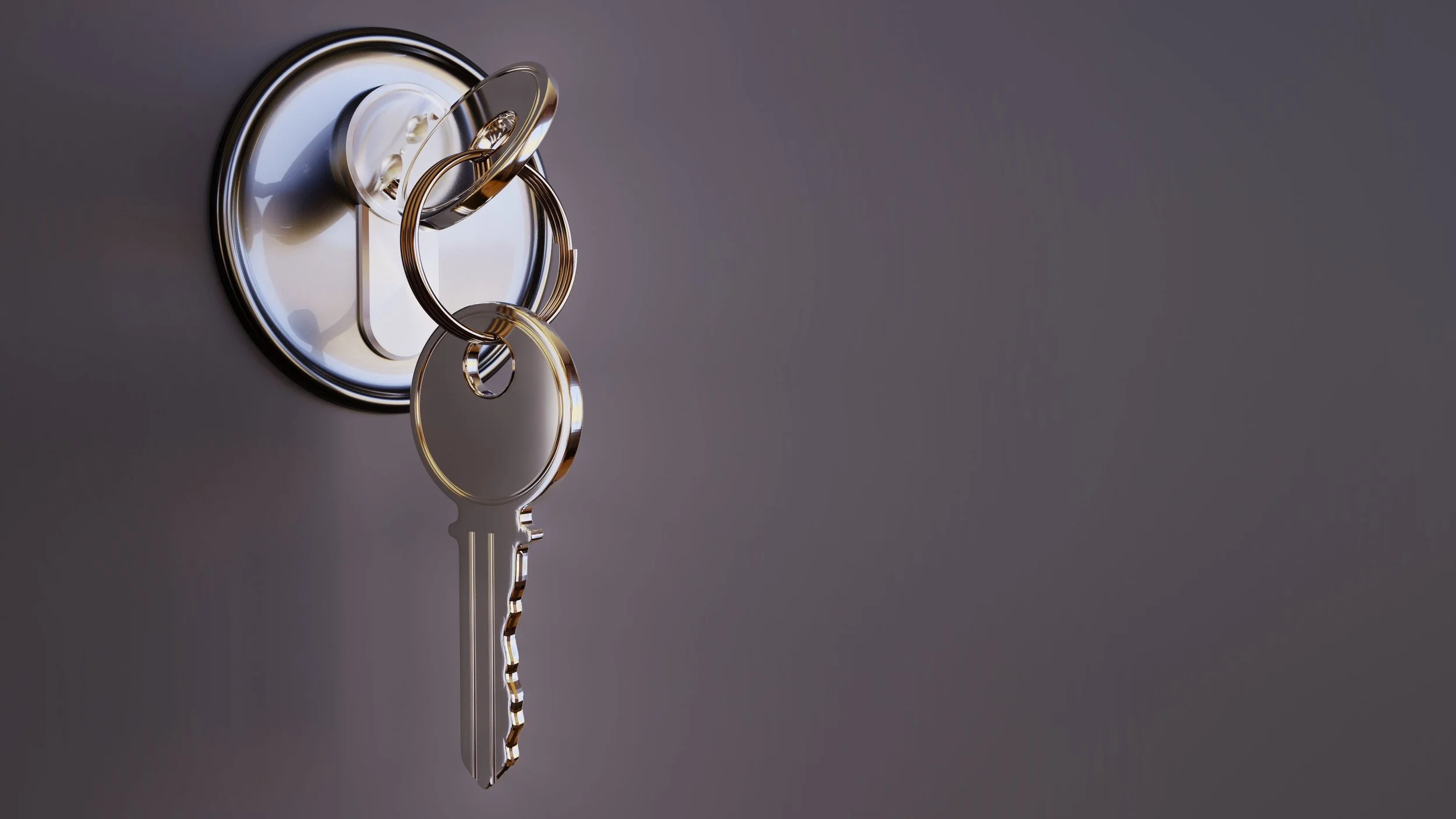
Why Choosing The Right Locks Matter
Locks that matter…
A lock is easy to overlook until it fails.
For most homeowners and business owners, a lock is simply the part of the door that keeps it closed and allows the right people to get inside. But from a locksmith's perspective, the lock is only one part of a larger door hardware system.
The right lock depends on the door, the building, the frequency of use, the level of security required, the type of users accessing the property, and sometimes even the fire-rating and life-safety requirements of the opening.
That is why choosing between Schlage, Kwikset, Yale, or another established lock manufacturer is not necessarily about finding one brand that is universally "better." It is about matching the hardware to the application.
For residential properties, a properly selected deadbolt or electronic lock may be exactly what is needed. A busy commercial entrance, on the other hand, may require Grade 1 cylindrical or mortise hardware, a controlled key system, interchangeable cores, or an integrated access-control solution.
Understanding those differences can save property owners money, reduce premature hardware failure, and provide a much more practical level of security.
Schlage, Kwikset and Other Lock Brands: What Actually Matters?
Schlage and Kwikset are two of the most recognizable names in residential and commercial door hardware, but they serve somewhat different segments of the market.
Schlage has a broad commercial hardware lineup that includes cylindrical locks, mortise locks, deadbolts, tubular locks, specialty hardware, and high-security key systems. Its commercial products include both Grade 1 and Grade 2 hardware designed for different levels of use.
Kwikset is particularly well known in the residential market and for its SmartKey Security technology. SmartKey allows compatible Kwikset locks to be re-keyed without removing the lock from the door, which can be useful when homeowners move, keys are lost, or access needs to be changed.
Other manufacturers, including Yale, Baldwin, Corbin Russwin, Medeco, BEST, Sargent, and others, have their own hardware platforms and key systems designed for particular residential, commercial, institutional, or high-security applications.
The important question is therefore not simply:
"Which brand is the best?"
The better question is:
"Which lock is appropriate for this door and this application?"
That is where professional locksmithing becomes more than simply replacing a lock.
Understanding ANSI/BHMA Lock Grades
One of the most important terms to understand when comparing commercial door hardware is ANSI/BHMA grading.
ANSI/BHMA standards establish testing requirements for different categories of door hardware. The specific testing standard depends on the type of hardware being evaluated, so a Grade 1 classification should always be considered within the context of the particular product category.
In general, commercial hardware is commonly encountered in three performance classifications:
Grade 1
Grade 1 hardware is generally designed for demanding applications and higher levels of traffic and use.
This type of hardware is commonly found on:
Commercial exterior doors
High-traffic entrances
Retail buildings
Office buildings
Multifamily properties
Institutional facilities
Frequently used interior openings
For example, Schlage's PC Series cylindrical locks are ANSI/BHMA Grade 1 products designed for commercial real estate, retail, multifamily, and hospitality applications.
Grade 2
Grade 2 hardware is commonly used where moderate-duty performance is appropriate.
It can be a practical solution for:
Interior commercial doors
Office tenant spaces
Apartment buildings
Light commercial applications
Lower-traffic openings
Schlage's ALX Series, for example, is a Grade 2 cylindrical platform designed to work alongside its Grade 1 hardware when different openings within the same property have different performance requirements.
Grade 3
Grade 3 hardware is generally associated with lighter-duty residential applications.
That does not automatically mean a Grade 3 lock is "bad." It means the hardware was designed and tested for a different level of expected use.
A residential front door does not necessarily need the same hardware specification as the primary entrance to a busy restaurant, apartment complex, office building, or retail store.
The goal is appropriate hardware—not simply the highest grade available.
Deadbolts: The Residential Workhorse
For residential properties, the deadbolt remains one of the most common pieces of mechanical security hardware.
A deadbolt is different from a spring latch because the locking bolt is not designed to retract simply by applying pressure to the door. That makes proper installation, strike alignment, frame condition, and bolt engagement extremely important.
A quality deadbolt can provide years of reliable service, but even a well-made lock cannot compensate for a weak or damaged door frame.
This is something homeowners sometimes overlook.
If the strike plate is loose, the screws are too short, the door is sagging, or the frame has been damaged, replacing the lock alone may not address the underlying problem.
A locksmith evaluating a residential lock installation should consider the entire opening—not just the cylinder.
Schlage Locks for Residential and Commercial Applications
Schlage is one of the brands Lenny commonly encounters because its product line extends well beyond basic residential deadbolts.
On the residential side, Schlage offers traditional mechanical locks as well as electronic and smart-lock products.
On the commercial side, the hardware becomes considerably more specialized.
Schlage's commercial catalog includes Grade 1 cylindrical locks, Grade 2 cylindrical locks, mortise locks, deadbolts, tubular locks, and specialty hardware.
The difference between cylindrical and mortise hardware is especially important.
Cylindrical Locks
Cylindrical locks are sometimes referred to as bored locks. They are extremely common in commercial environments because they are relatively straightforward to install and maintain.
They are frequently used in:
Offices
Retail stores
Restaurants
Multifamily properties
Classrooms
Commercial tenant spaces
Schlage notes that cylindrical locks use a single latchbolt and are generally less invasive to the door than mortise locks. They are available in both Grade 1 and Grade 2 configurations.
For a busy commercial property, selecting the appropriate cylindrical lock grade and cylinder system can make a significant difference in long-term performance.
Mortise Locks
Mortise locks are a different type of commercial hardware.
Instead of mounting the entire locking mechanism primarily through a cross-bore in the door, the lock case is installed into a pocket cut into the edge of the door.
This allows for a larger and more substantial locking mechanism and can provide additional functionality.
Mortise locks are commonly encountered in:
Commercial entrances
Office buildings
Hotels
Multifamily properties
Institutional buildings
High-traffic openings
Schlage's Grade 1 mortise platforms include a wide range of functions, cylinder options, and configurations for demanding commercial applications.
For a locksmith, the distinction between cylindrical and mortise hardware isn't simply cosmetic. The door preparation, lock function, cylinder format, strike, frame, and life-safety requirements all have to work together.
Kwikset and SmartKey: Convenience Has a Place
Kwikset is particularly popular in residential applications, and its SmartKey Security platform is one of the company's most recognizable features.
SmartKey allows compatible locks to be re-keyed using a working key and the appropriate SmartKey tool. This can be useful for homeowners who want to change the operating key without replacing the entire lock.
For example, re-keying can make sense after:
Moving into a new home
Losing a key
Giving a key to someone who no longer needs access
Tenant turnover
Remodeling
Changing household access
Standardizing several compatible locks to the same key
There is an important distinction, however, between re-keying a lock and replacing a lock.
SmartKey technology is designed around Kwikset's specific cylinder platform and is not a universal re-keying system for every manufacturer.
That is one reason homeowners should avoid assuming that every lock can simply be re-keyed to every other lock.
Rekeying vs. Replacing the Lock
One of the questions a locksmith hears frequently is:
"Do I really need a new lock, or can this one be re-keyed?"
In many situations, re-keying is the more practical solution.
A properly functioning lock may not need to be replaced simply because someone else previously had a key.
Re-keying changes the internal configuration of the cylinder so the old key no longer operates the lock.
It can be an excellent option when:
A tenant moves out
A property changes ownership
An employee leaves
Keys are lost or unreturned
A rental property changes management
A homeowner wants to eliminate previous key access
Replacement becomes more appropriate when the hardware itself is worn, damaged, outdated, incompatible with the door, or no longer provides the functionality the property requires.
For commercial properties, the conversation can become even more involved because a re-key may need to be coordinated with a master-key system, interchangeable core, restricted keyway, or larger building-wide key hierarchy.
Commercial Locks Are About More Than Security
Commercial locksmithing involves more than installing a stronger lock.
A business may need different employees to have different levels of access.
A property manager may need one key to operate several buildings while maintenance personnel have access only to designated areas.
A restaurant may need separate access for management, employees, storage areas, offices, and exterior doors.
An office building may require a master-key system or eventually transition from mechanical keys to electronic access control.
This is where terms such as key hierarchy, master keying, restricted keyways, interchangeable cores, access control, and credential management become important.
The correct hardware can make future maintenance and access management considerably easier.
Schlage's commercial platforms, for example, support multiple cylinder and key-system configurations depending on the hardware and application.
The Door Matters Just as Much as the Lock
A common mistake when replacing a lock is focusing entirely on the lockset.
A locksmith needs to look at the entire opening.
That can include:
Door material
Door thickness
Backset
Existing door preparation
Strike dimensions
Frame condition
Hinge condition
Latch alignment
Door closer operation
Exit hardware
Fire-rating requirements
Accessibility requirements
Existing key system
Intended frequency of use
A commercial lock can be perfectly suited to one door and completely inappropriate for another.
Fire-rated doors and commercial openings can also carry additional requirements. Manufacturers identify specific UL listings and applicable standards for qualifying hardware, while local codes and the Authority Having Jurisdiction ultimately determine what is permitted for a particular opening.
That is why simply ordering a lock online based on appearance or price can sometimes create a compatibility problem.
Smart Locks: Security Meets Access Management
Mechanical locks are no longer the only option.
Smart locks and electronic access systems have become increasingly common in residential properties, vacation rentals, multifamily housing, and small businesses.
The appeal is obvious.
Instead of handing someone a physical key, a property owner may be able to provide a code, credential, or other form of controlled access.
For vacation rentals and second homes around the Grand Strand, this can be particularly useful when different guests, cleaners, property managers, contractors, or owners need access at different times.
But electronic hardware still depends on the physical door.
A smart lock installed on a poorly aligned door can still have problems. Batteries can fail. Latches can bind. Doors can sag. Existing hardware may not be compatible.
Technology does not eliminate the need for proper door hardware selection—it makes that selection even more important.
Coastal Properties Have Their Own Considerations
Here along the Grand Strand, locksmith hardware can face conditions that aren't necessarily identical to those found in an inland market.
Murrells Inlet, Myrtle Beach, Surfside Beach, North Myrtle Beach, and surrounding coastal communities contain a mixture of:
Permanent residences
Vacation homes
Condominiums
Short-term rentals
Restaurants
Retail properties
Property-management portfolios
Commercial buildings
Waterfront properties
That means locksmiths regularly encounter everything from a basic residential deadbolt to commercial-grade entrance hardware and rental-property access systems.
For coastal properties, hardware selection, maintenance, corrosion resistance, proper installation, and timely repair can all matter over the life of the door.
The right solution isn't necessarily the most expensive lock on the shelf.
It is the hardware that matches the property.
So, What Lock Should You Choose?
There isn't one lock brand or one lock type that belongs on every door.
A homeowner may be perfectly well served by a quality residential deadbolt from Schlage, Kwikset, Yale, or another reputable manufacturer.
A high-traffic commercial entrance may require Grade 1 cylindrical hardware.
A heavier commercial application may call for mortise hardware.
A property manager may benefit from a controlled key system or interchangeable cores.
A vacation rental may benefit from electronic access.
And sometimes the best solution isn't replacing the lock at all—it may be repairing the door, correcting alignment, replacing a strike, or simply re-keying the existing hardware.
The right lock starts with understanding the door and the way the property is used.
That is the approach a professional locksmith brings to the job.
Need Help Choosing the Right Lock?
Whether you're replacing a residential deadbolt, upgrading commercial door hardware, re-keying a rental property, repairing a malfunctioning lock, or trying to determine what type of hardware your building actually needs, Lenny The Locksmith can help evaluate the existing opening and recommend a practical solution.
Serving Myrtle Beach, Murrells Inlet, Conway, Carolina Forest, Surfside Beach, North Myrtle Beach, and surrounding areas, Lenny provides residential, commercial, emergency, and property locksmith services throughout the Grand Strand.
Call Lenny The Locksmith at (843) 877-6669 for 24/7 locksmith service.